

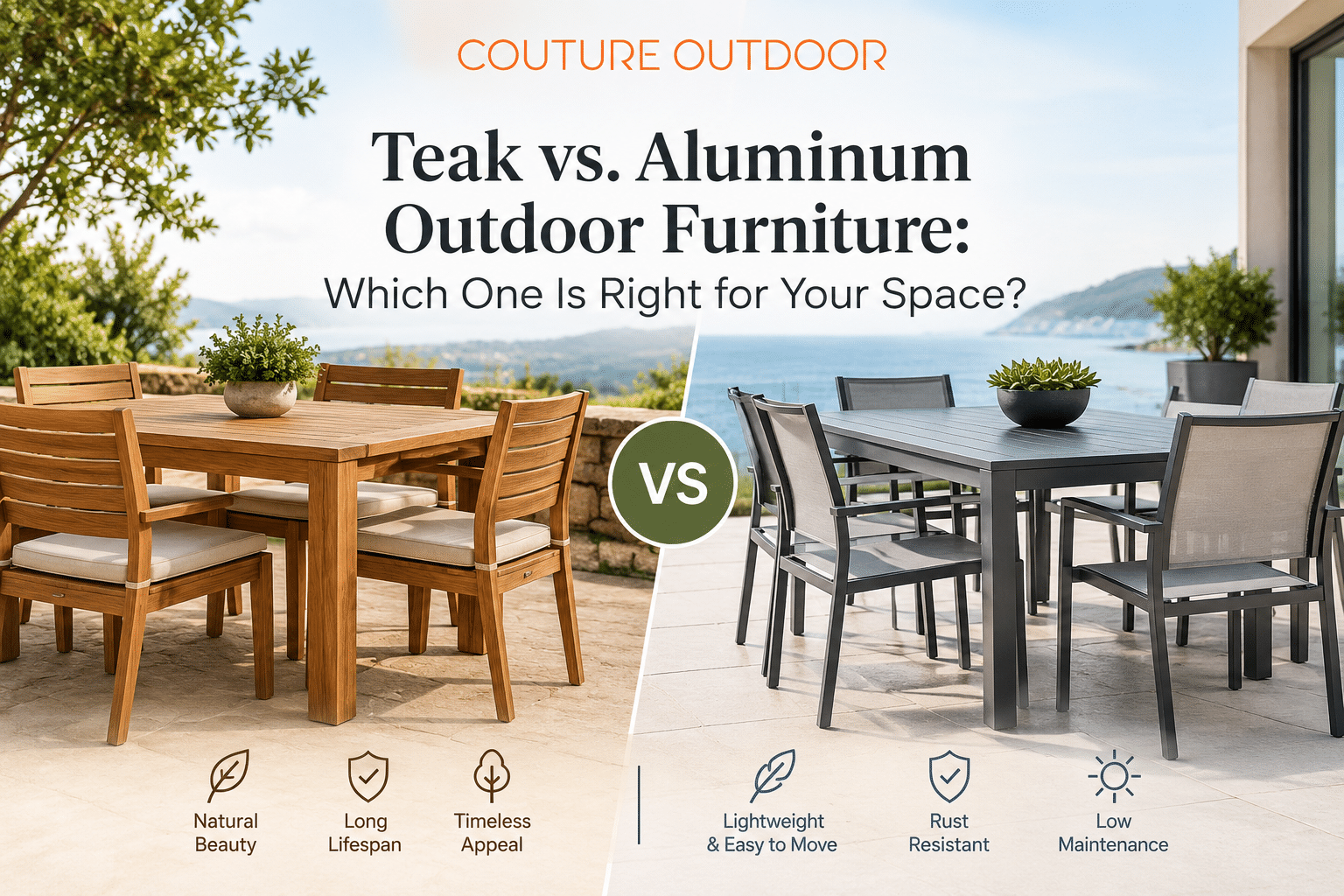
Choosing outdoor furniture is not only about looks. The material changes how the furniture feels, how much care it needs, how easy it is to move, and how well it fits your space.
Teak and aluminum are two of the most common choices. Both work well, but they feel different. Teak gives you a natural wood look. Aluminum is cleaner and lighter. The right pick depends on the space, the weather, the design and how you’ll use it. For hotels, restaurants, resorts and private homes, european outdoor furniture often uses both materials, sometimes with fabric, sling or stainless steel too.
Teak Outdoor Furniture
People have used teak outdoors for many years. It has a warm natural colour and a wood grain that makes a space feel more relaxed. The main reason people choose it is that it handles being outside. You can leave teak out all year. Untreated teak slowly turns a soft silver-grey as it weathers. If you like the original golden colour, you can use teak care products now and then.
In European outdoor furniture, teak suits hotels and resorts that want a natural look around pools, gardens, terraces and dining areas. Teak also works well with other materials. Many collections pair teak with powder-coated aluminum frames. So you get the wood where it counts, without making every part of the piece from wood.
Aluminum Outdoor Furniture
Aluminum is a different story. It’s strong and light, so it’s good for furniture that gets moved around. Powder coating gives it a protective finish and lets you pick the colour. That helps in restaurants, hotels and other busy places. Staff move furniture for cleaning, events, or new seating plans, and light pieces make that easier.
A lot of European outdoor furniture uses powder-coated aluminum in different colours and finishes. It’s easier to match with the building, cushions, umbrellas and the rest of the design. You can also mix it with teak. Some collections use aluminum frames with teak tops or arms. Metal and natural wood together.
Teak vs. Aluminum: Look and Style
Most people notice the look first.
- Teak has natural grain and a warm colour. It makes a terrace, pool or garden feel connected to what’s around it. Over time, untreated teak gets that silver-grey patina.
- Aluminum has a smoother, more even surface. With powder coating, you can get many colours, and it suits simple, modern designs.
So with European outdoor furniture, it often comes down to the feeling you want. Teak fits a natural or classic setting. Aluminum goes well with clean, contemporary design. You don’t have to pick just one. A hotel might use aluminum chairs with teak arms, or a table with an aluminum frame and teak top. This mix is already common.
Which One Is Easier to Move?
Aluminum is lighter and therefore easier to move. This makes it popular for temporary structures like pop-up shops and events. Teak is heavier. This works well for furnishings that are intended to be more permanent. For example, hotel rooms that are furnished with particular set-ups. If you’re running a hotel that has a rooftop restaurant, you may want to go with furnishings that can be moved about more easily.
Maintenance and Everyday Care
Neither is completely maintenance-free. Over time, teak will lose its color and darken. If you’d like to maintain the color of the teak, you can purchase teak protectants that will maintain the color. Aluminum, on the other hand, will discolor over time if it’s not cleaned regularly. It’s a good idea to have your housekeeping staff clean the furnishings if they’re outdoors and around the restaurant.
In the end, it’s about the maintenance your hotel is willing to do. If your hotel staff is trained to clean and maintain a variety of equipment, they’ll be able to maintain teak and aluminum furnishings easily. Equipment near the pool or beaches may require more upkeep.
Where Teak Works Best
Teak is one of the best choices for a luminous natural material. It enhances the look of the surroundings of resorts and gardens. Teak offers a design element which can not be substituted with metal. Teak outdoor furniture complements other elements of outdoor spaces such as natural fabrics and stones. Teak pieces need not be large. Use it in small piece of a design.
Where Aluminum Works Best
Aluminum outdoor furniture offers a lot of flexibility to designers. Pieces of outdoor furniture made of aluminum are lightweight and easy to transport. Compared to other materials, pieces made from aluminum offer a lot of options to designers in the choice of colors.
Teak takes on various arrangements with ease, and retains its beauty over time. This makes teak ideal for dividing spaces within hotels and restaurants. Teak also easily complements other materials, such as tabletops and armrests, to create a classy and inviting design.
What About Coastal Areas?
Moisture and salt in the air can take a toll on materials. Furniture made from teak can also be found in high-moisture areas, such as near coasts. The use of aluminum is acceptable, as long as the right finish is applied and the furniture is properly maintained. When shopping for aluminum furniture, check for the full spec and consider your local climate. Outdoor aluminum furniture can be found at hotels and resorts along the coasts of Europe.
Teak and Aluminum Can Work Together
You don’t always have to pick. A mixed design gives you the good side of both. Aluminum where you want a lighter frame, teak where guests see and touch it. A restaurant could use teak-topped tables with aluminum club chairs. A pool area could have light aluminum loungers with a few teak details. A rooftop lounge might have an aluminum frame with teak accents.
How to Choose for a Hotel or Resort
Hotels have to think about more than looks. Many guests use the furniture every day, staff move it, and the weather hits it. Start with the space. A pool, rooftop restaurant, garden and dining area may all need different things.
Then look at the design. A warm, natural property may suit teak. A clean, modern one may suit aluminum. You can also choose European outdoor furniture as part of a bigger contract project, where tables, chairs, sofas, daybeds and loungers all need to work together. For custom projects, we can mix materials so the look stays the same across the property.